




Blog
Why Jute Rugs Are Perfect for Eco-Friendly Homes

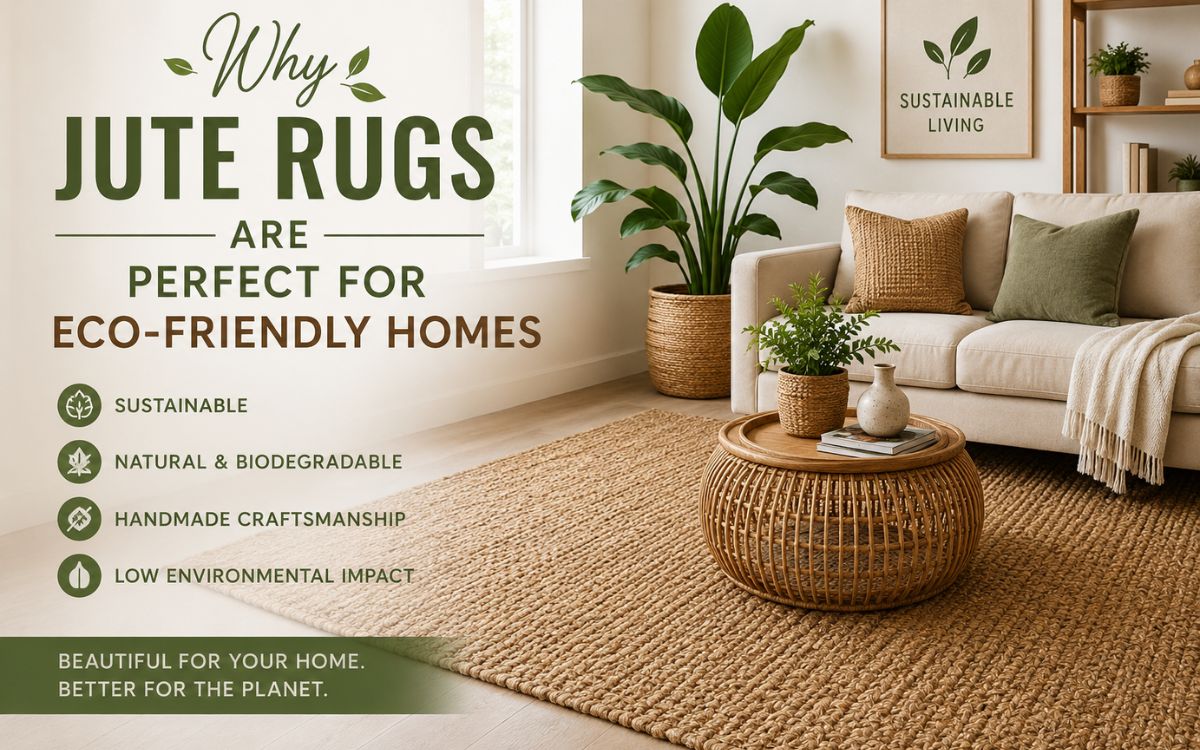
As more homeowners embrace sustainable living, every decorating decision matters—including the flooring beneath our feet. People are no longer choosing home décor based only on style or price. They also want products that are environmentally responsible, ethically made, and built to last. From furniture crafted with reclaimed wood to organic textiles and energy-efficient lighting, eco-conscious choices are shaping modern interior design. Eco-friendly jute rugs have become a popular choice for homeowners who want to combine natural beauty, durability, and sustainability in their living spaces.
If you’re looking for a practical way to make your home greener without sacrificing comfort or aesthetics, understanding why jute rugs are perfect for eco-friendly homes is a great place to start.
In this guide, you’ll learn what makes jute rugs sustainable, their environmental and health benefits, where they work best in your home, how they compare with synthetic rugs, and how to choose one that fits your lifestyle.
Quick Overview
| Feature | Details |
| Material | Natural Jute Fiber |
| Sustainability | Excellent |
| Biodegradable | Yes |
| Best Rooms | Living Room, Bedroom, Dining Room, Home Office |
| Durability | High for Indoor Use |
| Maintenance | Easy with Regular Care |
| Pet Friendly | Moderate |
| Eco Rating | ★★★★★ |
What Are Jute Rugs?
Jute rugs are woven from natural fibers harvested from the jute plant, a fast-growing crop primarily cultivated in warm, humid regions of India and Bangladesh. Often referred to as the “golden fiber,” jute has been used for centuries to produce ropes, sacks, baskets, and household textiles due to its strength and versatility.
Unlike synthetic fibers made from petroleum-based materials, jute grows naturally with minimal environmental impact. Farmers typically rely on seasonal rainfall, reducing the need for extensive irrigation. The crop also requires fewer pesticides and fertilizers than many conventional fiber crops, making it a more sustainable agricultural choice.
From Farm to Handmade Rug
The journey of a handmade jute rug begins in fertile agricultural fields where mature jute stalks are harvested after approximately four to six months of growth. The fibers are extracted, washed, dried naturally, and spun into strong yarns.
Skilled artisans then weave these yarns using traditional handlooms or hand-braiding techniques. Every handcrafted rug reflects years of weaving expertise, making each piece unique in texture, pattern, and character. Small variations in the weave are a hallmark of genuine craftsmanship rather than imperfections.
Because the production process relies heavily on manual skills instead of energy-intensive machinery, handmade jute rugs generally have a lower environmental footprint than many mass-produced alternatives.
Why Jute Is One of the Most Sustainable Natural Fibers
Several qualities make jute stand out among natural fibers:
- Rapid annual growth
- Renewable harvesting cycle
- Biodegradable composition
- Minimal chemical processing
- Low water requirements
- Lower carbon footprint than many synthetic materials
- Renewable every growing season
These characteristics have made jute one of the preferred materials for homeowners seeking environmentally responsible home décor.
Why Jute Rugs Are Perfect for Eco-Friendly Homes
Choosing eco-friendly products isn’t simply about buying items labeled “green.” It’s about understanding how products are sourced, manufactured, used, and eventually returned to the environment. Jute rugs perform exceptionally well across each stage of this lifecycle.
Renewable Natural Resource
Jute is among the fastest-growing renewable fibers available today. The plants mature within just a few months and are replanted every year, ensuring a continuous and sustainable supply without depleting natural resources.
Unlike petroleum-based synthetic fibers that depend on finite fossil fuels, jute comes directly from nature and regenerates season after season.
For environmentally conscious homeowners, this makes jute an excellent long-term flooring choice.
Naturally Biodegradable
One of the greatest environmental advantages of jute rugs is that they naturally decompose over time.
When a jute rug reaches the end of its usable life, it can break down naturally under appropriate composting or environmental conditions instead of remaining in landfills for decades or centuries like many synthetic rugs.
Choosing biodegradable home furnishings helps reduce long-term waste while supporting a more circular approach to consumption.
Low Environmental Impact
Compared with many manufactured flooring materials, jute requires relatively little processing before becoming a finished rug.
Its production generally involves:
- Natural fiber extraction
- Sun drying
- Spinning
- Traditional weaving
- Minimal finishing
The simpler manufacturing process consumes less energy than producing synthetic fibers derived from petroleum.
Minimal Chemical Processing
Many synthetic carpets undergo extensive chemical treatments during manufacturing.
By contrast, quality handmade jute rugs often retain much of the fiber’s natural characteristics. While some products may receive treatments for durability or colorfastness, the base material itself requires relatively little chemical processing.
This makes jute an attractive choice for homeowners seeking more natural interior materials.
Helps Reduce Carbon Footprint
Plants naturally absorb carbon dioxide during growth, and jute is no exception.
Jute cultivation contributes to carbon absorption while producing renewable raw material for textiles. Choosing products made from renewable plant fibers instead of petroleum-derived alternatives can be one small part of reducing the overall environmental footprint of home furnishings.
Although no product is entirely impact-free, jute represents a more sustainable option compared with many conventional synthetic flooring materials.
Supports Sustainable Agriculture
Jute farming plays an important role in supporting agricultural communities across South Asia.
Because the crop grows quickly and typically relies on seasonal rainfall, it integrates well into many regional farming systems. Responsible jute cultivation can also provide income opportunities for rural farming families while encouraging continued investment in renewable natural resources.
When consumers choose ethically sourced handmade jute rugs, they help support both environmental sustainability and traditional livelihoods.
Plastic-Free Home Décor
Many modern rugs contain polyester, polypropylene, nylon, or acrylic fibers—all derived from plastics.
Jute rugs offer a refreshing alternative.
Their natural texture, earthy appearance, and biodegradable composition allow homeowners to reduce the amount of synthetic materials used throughout their living spaces.
For people gradually transitioning toward a low-plastic lifestyle, replacing synthetic rugs with natural fiber alternatives is a practical first step.
Renewable Every Growing Season
Unlike hardwood trees that may require decades to mature, jute completes its growth cycle in just a few months.
This rapid renewal helps ensure a sustainable supply without placing excessive pressure on natural ecosystems.
Fast regeneration is one reason jute continues to be recognized as one of the world’s most environmentally responsible textile fibers.
Perfect for Modern Sustainable Living
Today’s eco-friendly homes prioritize products that balance beauty, durability, and environmental responsibility.
Jute rugs meet all three goals.
Their neutral colors complement Scandinavian, farmhouse, coastal, minimalist, bohemian, rustic, and contemporary interiors. Whether placed beneath a coffee table, layered with wool rugs, or used as a statement piece in an entryway, they bring warmth and organic texture into any room.
More importantly, they allow homeowners to decorate thoughtfully—choosing products that support sustainability without compromising style.