



Blog
How to Clean and Maintain Jute Rugs

If you’ve brought a jute rug into your home, you already know what makes it special: that warm, earthy texture, the natural color variation, and the eco-friendly story behind every woven strand. But jute rugs also come with a learning curve. Unlike synthetic rugs that shrug off spills and steam cleaners, jute is a natural plant fiber that reacts to water, harsh chemicals, and rough handling in ways that can permanently change how it looks and feels.
The good news is that cleaning and maintaining a jute rug isn’t complicated once you understand a few core rules. This guide walks through exactly how often to clean your rug, which tools actually help (and which ones quietly ruin fibers), how to tackle stains before they set, and how to keep your rug looking good for years. Whether you just unboxed your first jute rug or you’re trying to rescue one that’s seen better days, you’ll find practical, experience-based advice below.
Why Jute Rugs Need Special Care
Jute is spun from the stalks of the jute plant, which means every rug you buy is essentially a woven mat of dried plant fibers. That’s a big part of its charm, but it’s also why jute behaves so differently from wool, cotton, or synthetic rugs.
Natural plant fibers. Jute strands are hollow and slightly rough, which gives the rug its texture but also means it absorbs liquid quickly rather than repelling it.
Moisture sensitivity. Because jute soaks up moisture almost like a sponge, excess water can travel deep into the fibers and the rug backing, where it’s slow to evaporate. Trapped moisture is the single biggest threat to a jute rug’s lifespan.
Dirt absorption. The same fibrous texture that makes jute feel soft also traps dust, dander, and fine debris. Left alone, this buildup can dull the rug’s natural color over time.
Eco-friendly material. Jute is biodegradable and renewable, which is exactly why so many eco-conscious buyers choose it. But that same biodegradability means it’s more vulnerable to mold and mildew if it stays damp.
Handmade characteristics. Many jute rugs are handwoven, so the fibers can vary slightly in thickness and tightness from one rug to the next. This is normal, but it also means aggressive cleaning methods can loosen the weave unevenly.
Why harsh cleaners damage jute. Bleach, ammonia-based cleaners, and strong detergents strip the natural oils in jute fibers, making them brittle. Over time, this leads to fraying, discoloration, and a rug that feels stiff instead of soft.
How Often Should You Clean a Jute Rug?
Jute rugs don’t need constant attention, but consistency matters more than intensity. A light, regular routine will do far more for your rug’s longevity than an occasional deep clean.
- Daily care is really just about spot-checking high-traffic areas and wiping up any spills the moment they happen.
- Weekly maintenance centers on vacuuming to keep dust and grit from working into the fibers.
- Monthly cleaning involves a closer inspection, spot-treating any stains you missed, and freshening the rug with baking soda if needed.
- Seasonal deep care is the time to flip the rug (if it’s reversible), air it outdoors on a dry day, and check the backing for any signs of moisture damage.
High-traffic areas like entryways and living rooms need more frequent vacuuming than low-traffic spots like guest bedrooms.
| Maintenance Task | High-Traffic Areas | Low-Traffic Areas |
| Vacuuming | 2–3 times per week | Once a week |
| Spot cleaning | As soon as spills happen | As soon as spills happen |
| Deep inspection | Monthly | Every 6–8 weeks |
| Airing outdoors | Every 1–2 months | Every 3–4 months |
| Rotating the rug | Every 3 months | Every 6 months |
Essential Tools You’ll Need
You don’t need a cabinet full of specialty products to care for a jute rug — just the right basics, used correctly.
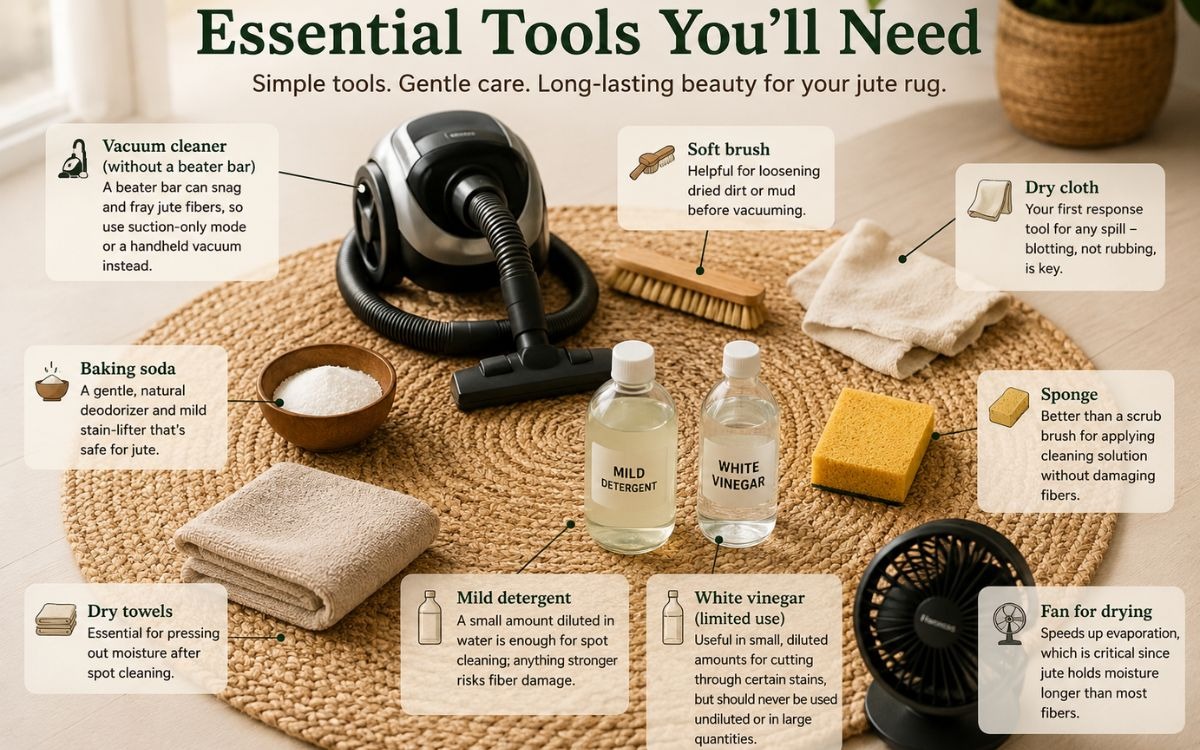
- Vacuum cleaner (without a beater bar): A beater bar can snag and fray jute fibers, so use suction-only mode or a handheld vacuum instead.
- Soft brush: Helpful for loosening dried dirt or mud before vacuuming.
- Dry cloth: Your first response tool for any spill — blotting, not rubbing, is key.
- Baking soda: A gentle, natural deodorizer and mild stain-lifter that’s safe for jute.
- Mild detergent: A small amount diluted in water is enough for spot cleaning; anything stronger risks fiber damage.
- White vinegar (limited use): Useful in small, diluted amounts for cutting through certain stains, but should never be used undiluted or in large quantities.
- Sponge: Better than a scrub brush for applying cleaning solution without damaging fibers.
- Dry towels: Essential for pressing out moisture after spot cleaning.
- Fan for drying: Speeds up evaporation, which is critical since jute holds moisture longer than most fibers.
Step-by-Step Guide to Cleaning a Jute Rug
- Remove loose dirt first. Shake smaller rugs outdoors or gently sweep larger ones to knock away surface debris before you vacuum.
- Vacuum correctly. Use a low-suction, beater-bar-free setting and go with the direction of the weave, not against it.
- Spot clean immediately. The moment a spill happens, treat it — the longer liquid sits, the deeper it soaks into the fibers.
- Blot instead of rubbing. Rubbing pushes stains deeper and roughs up the fibers; blotting from the outside of the stain inward lifts it out instead.
- Use minimal water. A barely damp cloth or sponge is almost always enough; jute should never be saturated.
- Dry quickly. Point a fan at the treated area and, if possible, prop the rug up so air circulates underneath.
- Restore fibers. Once fully dry, brush the treated area gently with a soft brush to lift the fibers back into place and even out the texture.
How to Remove Common Stains
Coffee and tea: Blot up excess liquid immediately, then dab with a cloth dampened in a mild detergent solution. Work from the edges of the stain toward the center to avoid spreading it.
Wine: Blot immediately — never rub. Sprinkle baking soda over the area to absorb residual moisture, let it sit for a few hours, then vacuum it up.
Mud: Let it dry completely first. Wet mud smears into the fibers, but dried mud can be brushed and vacuumed out cleanly.
Pet accidents: Blot up as much liquid as possible, then use a diluted vinegar-water solution (never full-strength) to neutralize odor before blotting dry with towels.
Food spills: Scrape off any solid residue first, then treat the remaining mark with a lightly damp cloth and mild detergent.
Oil stains: Cover the area with baking soda or cornstarch to absorb the oil, leave for several hours, then vacuum and treat any remaining mark with a small amount of mild detergent.
Ink: Blot gently with a dry cloth — avoid water at first, since it can spread ink further. If a mark remains, dab very lightly with a diluted detergent solution and blot dry immediately.
In every case, avoid soaking the stain, scrubbing hard, or using bleach — all of these do more damage than the stain itself.
Can You Wash a Jute Rug?
In short: no, not the way you’d wash a cotton bath mat. Jute rugs should never be soaked, submerged, or run through a washing machine.
Why soaking is harmful: Jute fibers absorb water readily but release it slowly, so soaking traps moisture deep in the weave and backing.
Why machine washing isn’t recommended: The agitation and prolonged water exposure can warp the rug’s shape and severely weaken the fibers.
Risk of shrinkage: Jute can shrink or become misshapen when exposed to too much water, especially if it dries unevenly.
Fiber damage: Overexposure to water breaks down the natural structure of jute, leading to fraying and a rougher texture over time.
Mold growth: Because jute retains moisture, any rug that stays damp for an extended period is at real risk of developing mold or mildew, particularly in the backing where airflow is limited.
How to Remove Odors from Jute Rugs
Odors tend to build up gradually in natural fiber rugs, but they’re usually easy to manage with a few simple habits.
- Baking soda: Sprinkle it generously over the rug, let it sit for at least a few hours (overnight works well), then vacuum thoroughly.
- Fresh air: Simply opening windows and letting air circulate through the room helps prevent odors from settling into the fibers.
- Sunlight (limited exposure): A short period of indirect or filtered sunlight can help freshen a rug, but prolonged direct sun exposure will fade its natural color.
- Activated charcoal: Placing charcoal pouches near the rug can help absorb musty smells, especially in humid climates.
- Proper ventilation: Keeping the room well-ventilated, especially in humid seasons, prevents the kind of trapped moisture that leads to persistent odors.
Mistakes to Avoid When Cleaning Jute Rugs
- Using too much water during spot cleaning
- Steam cleaning, which introduces excess moisture and heat
- Pressure washing, which can tear or distort the fibers
- Using bleach, which weakens and discolors jute
- Reaching for strong chemical cleaners not designed for natural fibers
- Scrubbing aggressively instead of blotting
- Leaving spills untreated, even for a short time
- Drying slowly, which increases the risk of mold and mildew
Daily Maintenance Tips
- Vacuum regularly using a suction-only or low setting
- Rotate the rug periodically to even out wear patterns
- Keep the rug away from consistent moisture sources, like entryways in rainy weather
- Use a rug pad underneath to reduce friction and improve airflow
- Clean spills immediately rather than waiting
- Avoid placing the rug in direct, prolonged sunlight
- Trim any loose fibers with scissors instead of pulling them
- Maintain moderate indoor humidity to prevent the fibers from drying out or absorbing excess moisture
Seasonal Care Tips
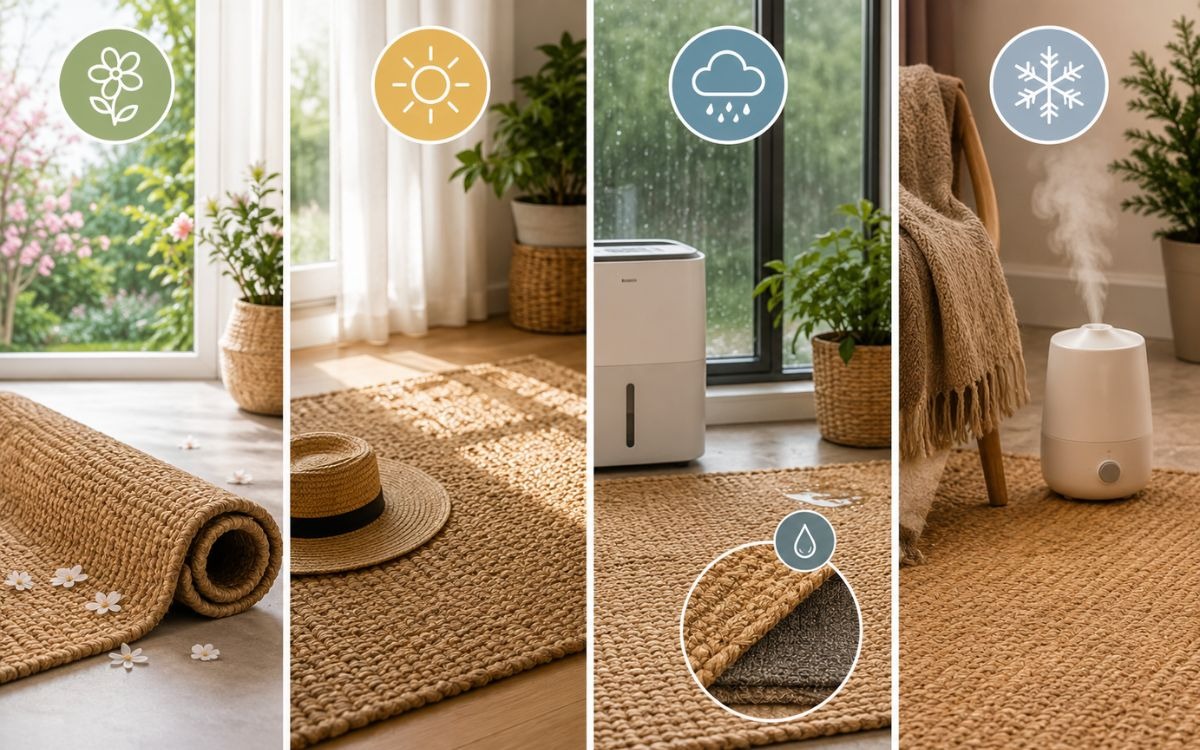
Spring: As humidity starts rising in many regions, this is a good time to air the rug outdoors on a dry day and check for any lingering odors from winter.
Summer: Heat and humidity can both affect jute, so keep the rug out of direct sun for extended periods and watch for any signs of dampness if you live somewhere humid.
Monsoon: This is the highest-risk season for jute rugs. Elevated humidity slows drying time dramatically, so it’s worth using a dehumidifier in the room and checking the rug’s underside regularly for moisture buildup.
Winter: Indoor heating tends to dry out the air, which can make jute fibers slightly brittle. A humidifier can help maintain a balance that keeps the rug supple.
Humidity is really the thread that runs through all four seasons — too little and the fibers dry out, too much and moisture gets trapped, so the goal year-round is a steady, moderate indoor environment.
How to Extend the Life of Your Jute Rug
- Stick to a consistent vacuuming schedule rather than letting dirt build up
- Address every spill immediately, no matter how small
- Use furniture coasters or pads under heavy furniture to prevent permanent indentations
- Rotate the rug every few months to distribute foot traffic evenly
- Keep it away from areas prone to consistent dampness, like near exterior doors
- Avoid placing the rug in rooms with poor ventilation
- Have it professionally cleaned periodically if it sees heavy use
When Should You Hire Professional Rug Cleaners?
Some situations call for expertise beyond home care:
- Persistent stains that don’t respond to spot cleaning after a couple of attempts
- Mold or a musty smell that keeps returning despite airing and baking soda treatments
- Water damage from flooding, leaks, or a spill that wasn’t caught in time
- Large rugs that are difficult to lift, flip, or air out on your own
- Antique or heirloom handmade rugs, where the wrong cleaning method could cause irreversible damage
Professional cleaners who specialize in natural fiber rugs have the equipment and drying methods to handle these situations without the guesswork.
Frequently Asked Questions
1. Can jute rugs get wet?
Jute rugs can tolerate light dampness during spot cleaning, but they should never be soaked or left wet for extended periods, since trapped moisture leads to mold and fiber damage.
2. Can I steam clean a jute rug?
No. Steam cleaning introduces too much moisture and heat, both of which weaken jute fibers and increase the risk of mold.
3. How do I remove stains from a jute rug?
Blot the stain immediately with a dry cloth, then treat it with a lightly damp cloth and mild detergent, working from the outside in and drying the area quickly afterward.
4. Can I vacuum a jute rug?
Yes, regular vacuuming is one of the best things you can do for a jute rug, as long as you avoid a beater bar and use a low-suction or gentle setting.
5. How often should I clean a jute rug?
Vacuum weekly (more often in high-traffic areas), spot clean spills immediately, and do a deeper inspection and refresh monthly.
6. What cleaning solution is safest for jute rugs?
A small amount of mild detergent diluted in water is generally the safest option, along with baking soda for odor control and light stain lifting.
7. Can pets damage jute rugs?
Pets can affect jute rugs through scratching, shedding, and accidents, but with a rug pad, regular vacuuming, and quick cleanup of spills, most pet-related wear can be managed.
8. How long do jute rugs last?
With proper care, a jute rug can last several years, though its lifespan depends heavily on foot traffic, humidity exposure, and how quickly spills are addressed.
9. Are jute rugs good for high-traffic areas?
Jute rugs can work well in moderately high-traffic areas, but they benefit from more frequent vacuuming and rotation in these spaces to manage wear evenly.
10. Can I use baking soda on a jute rug?
Yes, baking soda is one of the safest and most effective tools for deodorizing jute and lifting light stains, and it can be vacuumed away easily once it’s done its job.
Conclusion
Caring for a jute rug really comes down to a simple philosophy: be gentle, be quick, and be consistent. Gentle cleaning methods protect the natural fibers from the damage that harsh chemicals and excess water can cause. Quick action on spills prevents stains and moisture from ever having the chance to set in. And consistent, preventive maintenance — regular vacuuming, rotating, and airing out — does more to extend your rug’s life than any single deep clean ever could.
Natural fibers reward patience. A jute rug that’s cared for with these habits will keep its texture, color, and character for years, aging gracefully rather than wearing out. Build a simple routine around the tips in this guide, and you’ll be able to enjoy your jute rug’s warmth and natural beauty with confidence for a long time to come