



Blog
How to Clean Carpet at Home Without Professional Help

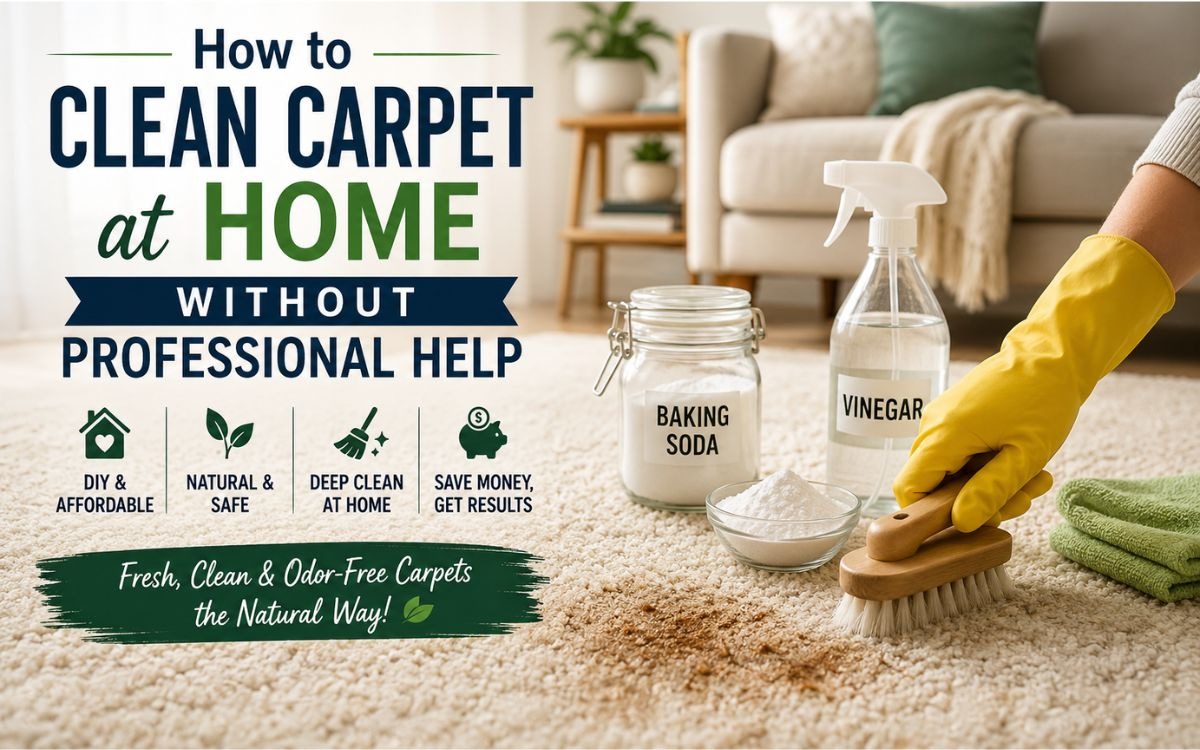
Carpets make a home feel warm, comfortable, and inviting. They soften footsteps, improve room aesthetics, and create a cozy environment for families and guests. However, carpets also collect dust, dirt, food crumbs, pet hair, allergens, bacteria, and unpleasant odors over time. Without regular cleaning, these contaminants can affect both the appearance of your carpet and the air quality inside your home.
Wondering how to clean carpet at home without professional help? Vacuum thoroughly, treat stains immediately, use a homemade carpet cleaner made with vinegar and baking soda, remove excess moisture, and dry the carpet completely. Regular DIY carpet cleaning keeps carpets fresh, removes odors, extends their lifespan, and saves money.
Many homeowners believe they need expensive professional services every time their carpet gets dirty. The good news is that learning how to clean carpet at home without professional help is easier than most people think. With a few affordable household supplies, a little patience, and the right cleaning techniques, you can restore your carpet’s freshness while saving hundreds of dollars.
Whether you’re dealing with muddy footprints, coffee spills, pet accidents, or everyday dirt, this guide covers practical DIY carpet cleaning methods that are safe, effective, and suitable for most carpet types. You’ll also learn how to make a homemade carpet cleaner, tackle stubborn stains, deep clean carpet at home, eliminate odors naturally, and maintain your carpet for years to come.
Why Regular Carpet Cleaning Matters
Cleaning your carpet isn’t just about keeping it looking nice. Routine maintenance protects your investment and creates a healthier living environment.
Improves Indoor Air Quality
Carpets trap dust, pollen, pet dander, and airborne particles. Over time, these contaminants accumulate and may become airborne whenever someone walks across the carpet. Regular vacuuming and occasional deep cleaning help improve indoor air quality.
Extends Carpet Lifespan
Tiny dirt particles act like sandpaper inside carpet fibers. Every footstep grinds them deeper into the material, causing premature wear. Regular cleaning removes abrasive debris before it damages the fibers.
Removes Allergens
Dust mites, pollen, mold spores, and pet hair often settle deep inside carpets. Regular DIY carpet cleaning helps reduce these allergens, creating a healthier home for children and allergy sufferers.
Prevents Unpleasant Odors
Food spills, moisture, pet accidents, and everyday use can leave lingering smells inside carpet fibers. Regular cleaning helps remove carpet odor before it becomes permanent.
Restores Appearance
Freshly cleaned carpets instantly brighten a room. Dirt and stains make carpets look older than they really are, while proper cleaning restores their original color and softness.
Things You’ll Need Before Cleaning
Before you begin, gather the following supplies. Most are inexpensive household items that work surprisingly well for routine carpet care.
| Item | Purpose |
| Vacuum Cleaner | Removes loose dirt, dust, and pet hair |
| Baking Soda | Neutralizes odors and lifts dirt |
| White Vinegar | Natural stain remover and deodorizer |
| Mild Dish Soap | Breaks down grease and food stains |
| Warm Water | Dilutes cleaning solutions |
| Spray Bottle | Applies cleaning solution evenly |
| Soft Brush | Gently loosens dirt without damaging fibers |
| Microfiber Cloth | Blots stains and absorbs moisture |
| Clean Towels | Removes excess water |
| Bucket | Mixes cleaning solutions |
Optional Supplies
- Rubber gloves
- Fan
- Wet/dry vacuum
- Sponge
- Old toothbrush for small stains
Having everything ready before you start makes the cleaning process faster and more efficient.
Step-by-Step Guide to Cleaning Carpet at Home
Follow these steps carefully for the best results.
Step 1: Remove Furniture
Start by clearing as much furniture from the room as possible.
Removing furniture allows you to clean the entire carpet evenly and prevents dirt from collecting around table legs, sofas, or cabinets. It also helps the carpet dry faster after cleaning.
If large furniture cannot be moved, place aluminum foil or plastic sheets under the legs to protect them from moisture.
Pro Tip
Take a photo of the room before moving furniture. It makes rearranging everything much easier after the carpet is dry.
Step 2: Vacuum Thoroughly
Never skip vacuuming.
Vacuuming removes loose dirt, pet hair, crumbs, and dust before applying any moisture. If you clean without vacuuming first, dirt can turn into muddy residue that’s much harder to remove.
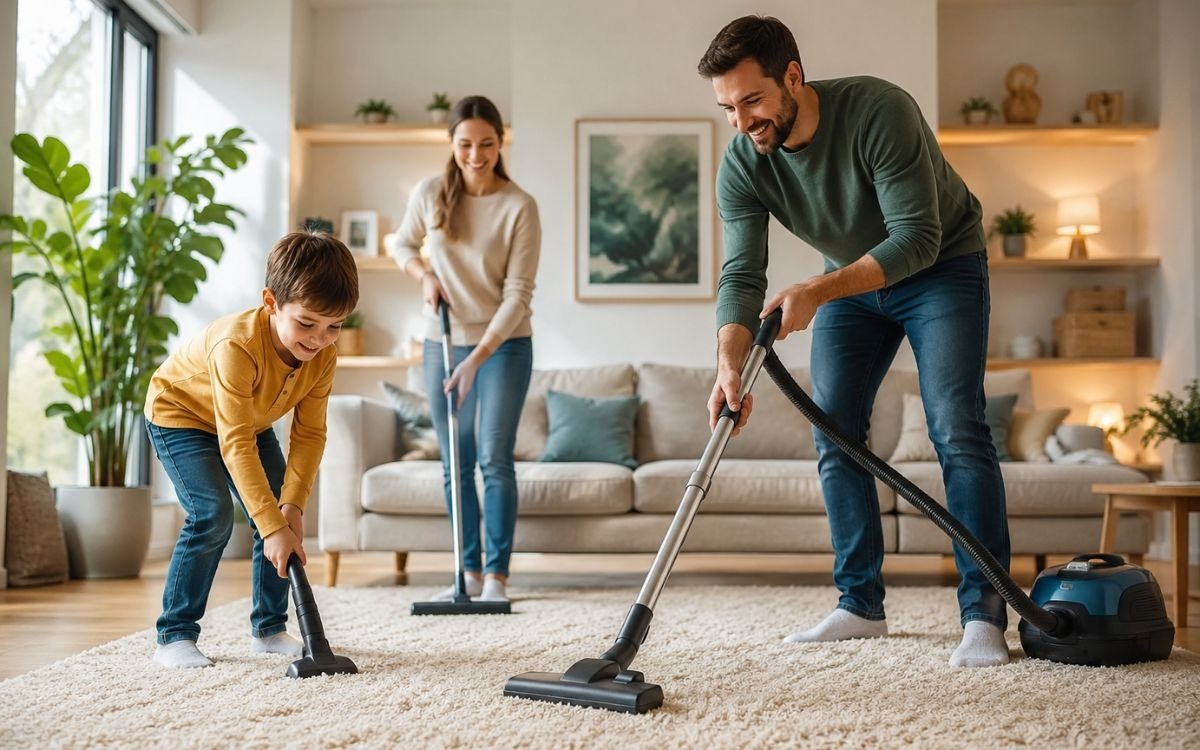
For best results:
- Vacuum slowly rather than quickly.
- Make several passes over high-traffic areas.
- Vacuum in multiple directions to lift embedded dirt.
- Use attachments for corners and along baseboards.
- Empty the vacuum bag or canister before starting.
A thorough vacuum can remove a significant amount of dry soil before any wet cleaning begins, making the rest of the process much more effective.
Step 3: Spot-Test Your Cleaning Solution
Before applying any cleaning solution to the entire carpet, always perform a spot test.
Choose a hidden corner or an area underneath furniture.
- Spray a small amount of cleaning solution.
- Wait 10–15 minutes.
- Blot with a clean cloth.
- Check for fading, discoloration, or fiber damage.
If the carpet looks unchanged after drying, the solution is generally safe to use on the rest of the carpet.
Skipping this simple step could result in permanent discoloration, especially on delicate or dyed carpets.
Step 4: Make a Homemade Carpet Cleaner
One of the biggest advantages of learning how to clean carpet at home without professional help is that you can make effective cleaning solutions using common household ingredients.
Instead of spending money on expensive commercial products, try a simple homemade carpet cleaner that is gentle on most carpets while effectively removing dirt and odors.
In the next section, you’ll find several DIY carpet cleaner recipes using white vinegar, baking soda, warm water, and mild dish soap, along with guidance on which solution works best for different types of stains.
DIY Cleaning Solution Recipes
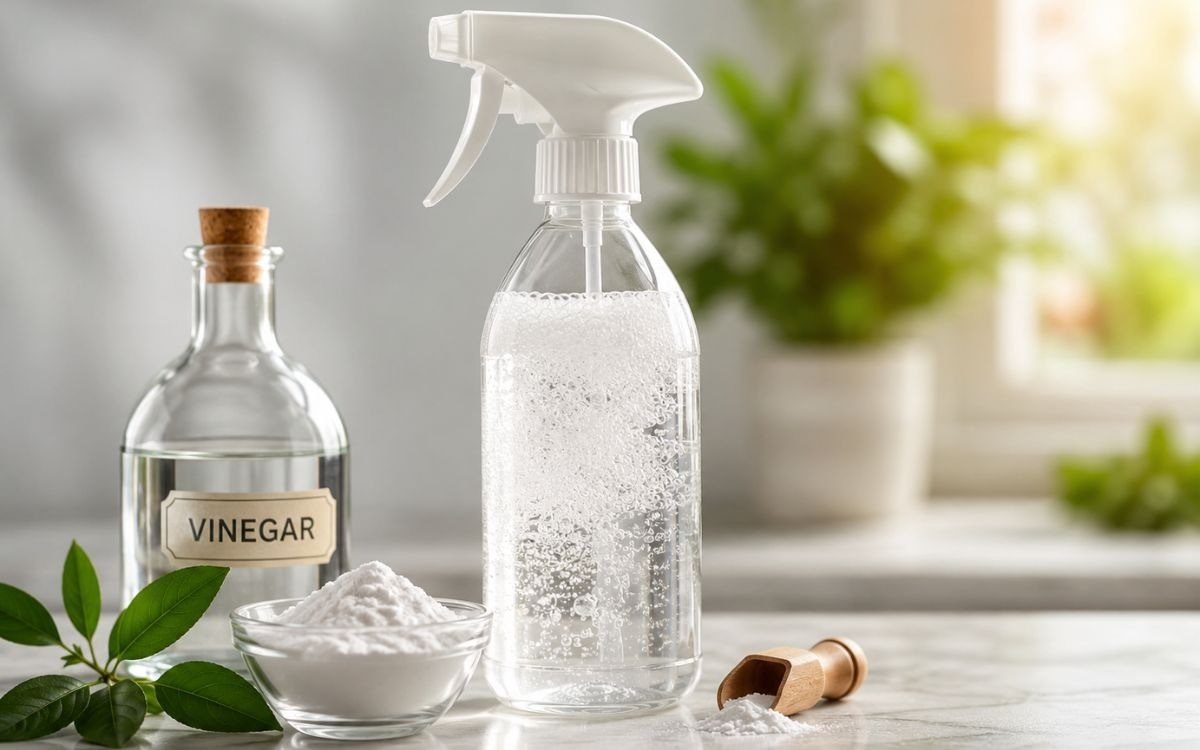
You don’t need expensive carpet shampoos to achieve great results. These simple, affordable cleaning solutions are made from common household ingredients and work well for everyday DIY carpet cleaning.
| Cleaning Solution | Ingredients | Best For | How to Use |
| Vinegar Solution | 1 cup white vinegar + 2 cups warm water | General cleaning, light stains, odors | Spray lightly, blot with a microfiber cloth, and allow to dry. |
| Baking Soda Treatment | Baking soda only | Removing carpet odor | Sprinkle evenly, let sit for 30 minutes to overnight, then vacuum thoroughly. |
| Dish Soap Cleaner | 1 teaspoon mild dish soap + 2 cups warm water | Food spills and grease | Dab gently with a cloth; avoid soaking the carpet. |
| Vinegar & Baking Soda | Spray vinegar first, then sprinkle baking soda | Deep stain treatment | Allow fizzing to stop, blot, and vacuum once dry. |
Tips for Using Homemade Carpet Cleaners
- Always use white vinegar, not colored vinegar.
- Mix fresh solutions before each use.
- Never pour large amounts of liquid onto the carpet.
- Blot stains instead of rubbing them.
- Test every solution on an inconspicuous area first.
These simple recipes are among the best carpet cleaning methods for routine maintenance and minor spills.
Treat Carpet Stains
Accidents happen, but acting quickly makes stain removal much easier. Below are effective methods for common carpet stain removal challenges.
Coffee Stains
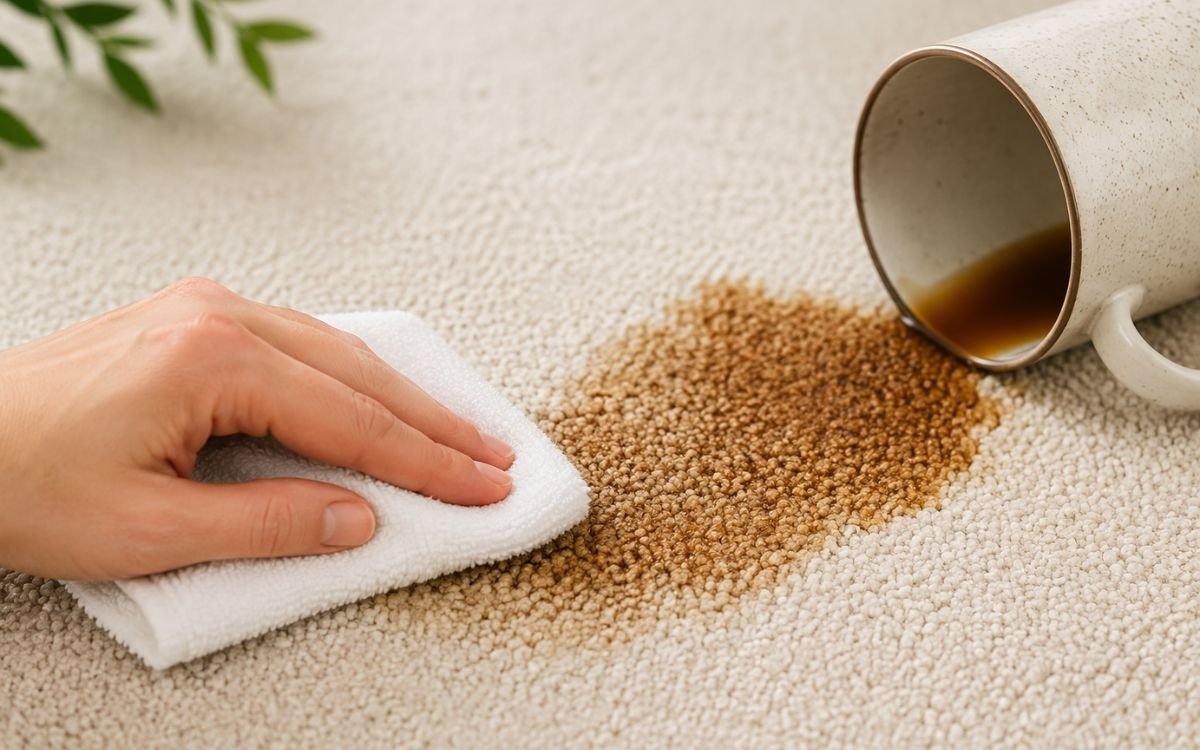
Coffee leaves dark tannin stains that become harder to remove as they dry.
How to Clean
- Blot excess coffee immediately.
- Mix vinegar and warm water.
- Spray lightly onto the stain.
- Blot with a microfiber cloth.
- Repeat if necessary.
Avoid scrubbing, which can spread the stain deeper into the carpet fibers.
Tea Stains
Tea contains natural pigments that can discolor carpets.
Steps
- Blot fresh spills.
- Apply mild dish soap solution.
- Let sit for five minutes.
- Blot gently.
- Rinse with clean water.
- Dry with a towel.
Red Wine Stains
Wine stains require immediate attention.
Method
- Blot—not rub—the spill.
- Sprinkle baking soda over the damp stain.
- Spray lightly with vinegar solution.
- Wait 15 minutes.
- Blot clean.
- Vacuum after drying.
Pet Urine
Pet accidents can leave stains and unpleasant odors if not treated properly.
Cleaning Process
- Blot as much liquid as possible.
- Spray vinegar solution generously.
- Let it sit for 10–15 minutes.
- Blot thoroughly.
- Sprinkle baking soda over the area.
- Allow it to dry completely.
- Vacuum the baking soda.
This method helps remove carpet odor while reducing bacteria and moisture.
Mud Stains
Never clean wet mud.
Instead:
- Let the mud dry completely.
- Vacuum loose dirt.
- Apply a mild soap solution.
- Blot gently.
- Dry with a towel.
Dry mud is much easier to remove than wet mud.
Ink Stains
Ink spreads easily if rubbed.
Best Practice
- Dab carefully with rubbing alcohol on a cloth.
- Work from the outside toward the center.
- Blot repeatedly.
- Rinse lightly with water.
- Dry immediately.
Avoid pouring alcohol directly onto the carpet.
Grease Stains
Grease attracts dirt and requires a different approach.
- Sprinkle baking soda over the grease.
- Wait 20–30 minutes.
- Vacuum thoroughly.
- Apply a small amount of dish soap solution.
- Blot clean.
Dish soap is excellent for breaking down oily residue.
Food Spills
Sauces, chocolate, ice cream, and other food spills should be cleaned promptly.
Quick Steps
- Remove solids using a spoon.
- Blot excess liquid.
- Spray mild soap solution.
- Blot repeatedly.
- Rinse lightly.
- Dry thoroughly.
Prompt action prevents permanent staining.
Deodorize the Carpet Naturally
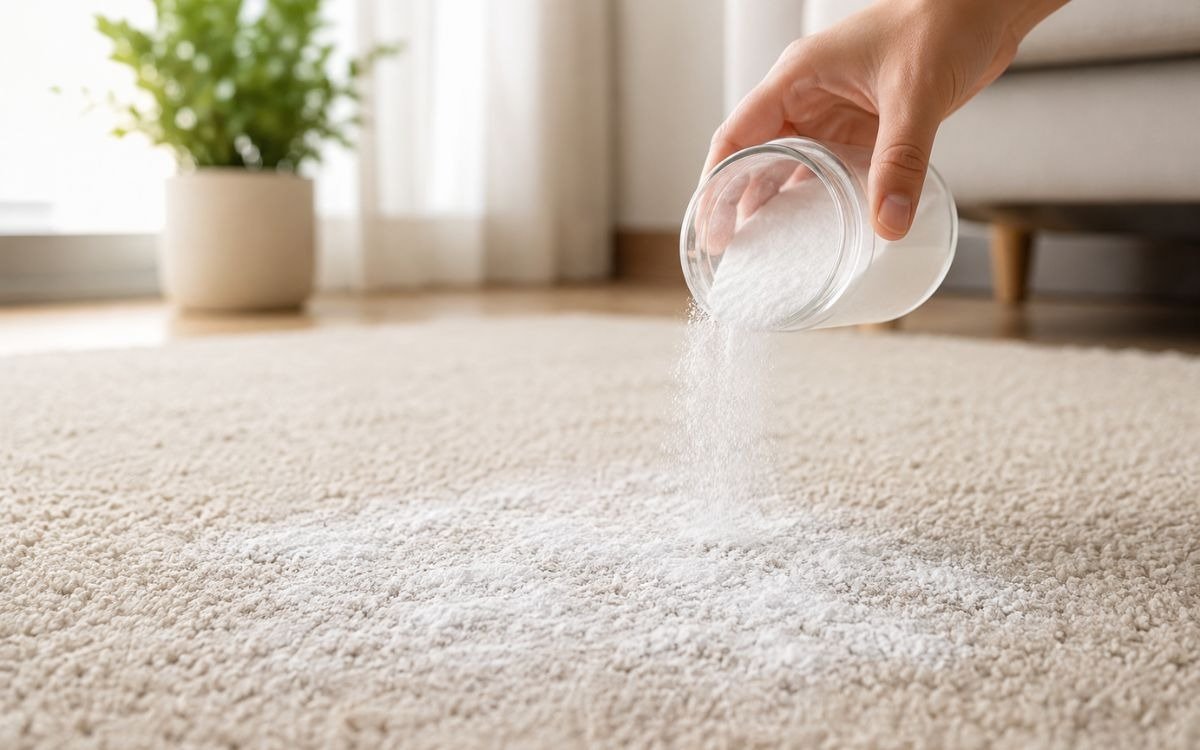
Even a clean-looking carpet can trap odors from pets, cooking, smoke, and moisture. Fortunately, baking soda is one of the easiest and most effective ways to clean carpet naturally.
Baking Soda Method
- Vacuum the carpet first.
- Sprinkle a generous layer of baking soda over the entire surface.
- Let it sit for at least 30 minutes.
- For strong odors, leave it overnight.
- Vacuum slowly and thoroughly.
Baking soda absorbs odor molecules instead of simply masking unpleasant smells.
For Homes with Pets
Repeat this treatment once every month to keep carpets smelling fresh.
Brush the Carpet Gently
After applying your cleaning solution, use a soft-bristle brush to loosen dirt trapped deep within the fibers.
Proper Brushing Technique
- Brush in one direction first.
- Then brush across the fibers.
- Use gentle pressure.
- Avoid aggressive scrubbing.
Over-scrubbing can damage carpet fibers and create fuzzy or worn patches.
A gentle brushing helps distribute the cleaning solution evenly while lifting embedded dirt.
Remove Excess Moisture
One of the biggest mistakes during DIY carpet cleaning is leaving too much moisture behind.
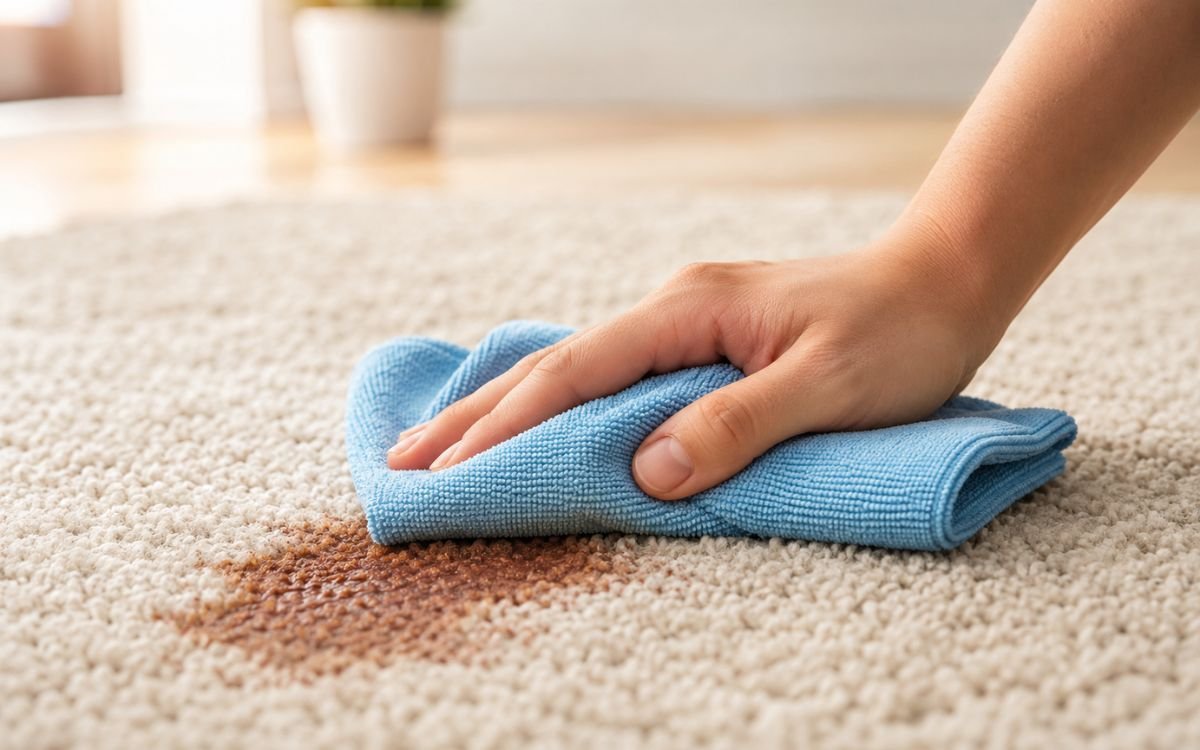
Excess water can:
- Encourage mold growth
- Cause mildew odors
- Damage carpet backing
- Increase drying time
Towel Method
- Place a clean, dry towel over the damp area.
- Press firmly using your hands or feet.
- Replace with another dry towel as needed.
- Repeat until very little moisture transfers to the towel.
If you own a wet/dry vacuum, use it to extract additional water after towel drying.
Removing as much moisture as possible helps deep clean carpet at home while reducing the risk of mold and unpleasant smells.
Dry the Carpet Properly
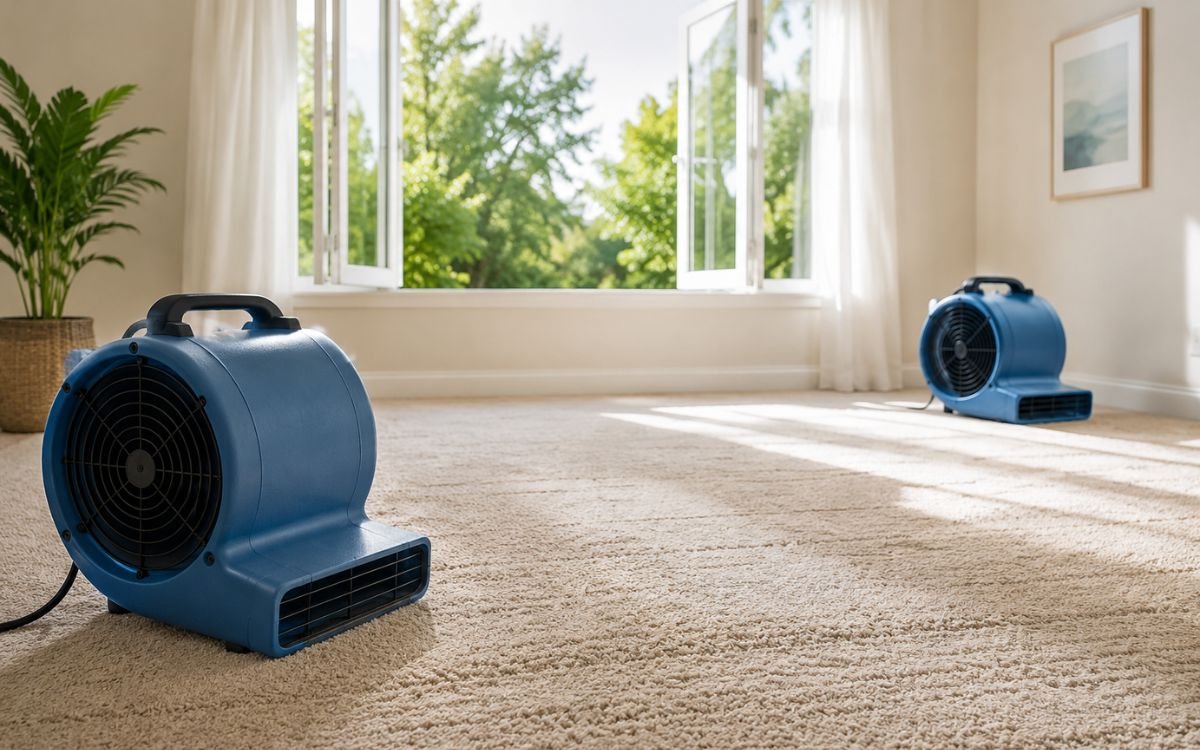
Drying is just as important as cleaning. A damp carpet can quickly develop mildew and odors if not dried correctly.
Use Fans
Position one or more fans so air flows across the carpet surface. Continuous airflow speeds up evaporation.
Open Windows
When weather permits, open windows and doors to improve ventilation and reduce indoor humidity.
Fresh air helps carpets dry naturally.
Turn on Air Conditioning
During humid weather, running the air conditioner helps remove moisture from indoor air, reducing drying time.
Use a Dehumidifier
If your home is humid, a dehumidifier can significantly speed up drying while preventing mildew.
Avoid Walking on Damp Carpet
Walking on a wet carpet can:
- Push dirt into clean fibers.
- Flatten the carpet pile.
- Slow drying.
- Cause footprints and marks.
Wait until the carpet is completely dry before replacing furniture or allowing heavy foot traffic.
How to Dry Carpet Quickly
Many homeowners ask how to dry carpet quickly after cleaning.
The fastest results come from combining several drying methods:
- Remove as much water as possible with towels.
- Use fans continuously.
- Open windows if outdoor humidity is low.
- Turn on ceiling fans.
- Run a dehumidifier.
- Increase indoor airflow.
- Keep furniture off the carpet until fully dry.
Most carpets dry within 6–12 hours, although thicker carpets or humid conditions may require up to 24 hours.
Proper drying prevents odors, mold, and bacteria while keeping your carpet looking its best.
Natural Carpet Cleaning Methods
If you prefer eco-friendly solutions, several everyday household ingredients can help you clean carpet naturally without relying on harsh chemicals. These methods are budget-friendly, easy to use, and suitable for routine maintenance.
1. Baking Soda
Baking soda is one of the safest and most effective natural carpet cleaners.
Benefits
- Neutralizes unpleasant odors
- Absorbs moisture
- Loosens dirt
- Safe for homes with children and pets (once vacuumed thoroughly)
How to Use
- Vacuum the carpet.
- Sprinkle baking soda evenly.
- Leave it for at least 30 minutes (overnight for strong odors).
- Vacuum thoroughly.
This method is ideal for remove carpet odor and routine freshening.
2. White Vinegar
White vinegar is a natural deodorizer and mild disinfectant that helps dissolve light stains.
Best For
- General cleaning
- Pet accidents
- Coffee stains
- Light food spills
How to Use
Mix:
- 1 cup white vinegar
- 2 cups warm water
Spray lightly onto the affected area and blot with a microfiber cloth. Avoid soaking the carpet.
3. Lemon Juice
Lemon juice has natural cleaning properties and leaves behind a fresh scent.
Best Uses
- Mild stains
- Freshening carpets
- Removing light discoloration
Caution
Because lemon juice is acidic, always dilute it with water and perform a spot test before use.
4. Salt
Salt works surprisingly well on fresh liquid spills.
How It Helps
- Absorbs moisture
- Prevents stains from spreading
- Helps lift wine and food spills
Sprinkle salt over a fresh spill, allow it to absorb the liquid, then vacuum and clean the remaining residue.
5. Hydrogen Peroxide (Use with Caution)
Hydrogen peroxide can remove stubborn organic stains but should be used carefully.
Best For
- Blood stains
- Pet stains
- Organic discoloration
Important Safety Tips
- Always spot-test first.
- Use only on light-colored carpets unless the manufacturer approves.
- Never mix hydrogen peroxide with vinegar.
Common Carpet Cleaning Mistakes to Avoid
Even the best cleaning products won’t deliver great results if they’re used incorrectly. Avoid these common mistakes to protect your carpet and extend its life.
1. Over-Wetting the Carpet
Applying too much water is one of the biggest DIY mistakes.
Too much moisture can:
- Cause mold growth
- Damage carpet backing
- Leave unpleasant odors
- Increase drying time
Instead, apply cleaning solutions lightly and blot excess moisture immediately.
2. Using Too Much Detergent
More soap doesn’t mean a cleaner carpet.
Excess detergent leaves behind sticky residue that attracts dirt, making carpets look dirty again much sooner.
Always follow recommended dilution ratios.
3. Scrubbing Aggressively
Many people instinctively scrub stains as hard as possible.
Unfortunately, this can:
- Damage carpet fibers
- Spread stains
- Wear down the pile
- Create fuzzy patches
Instead, blot gently and use a soft brush only when necessary.
4. Skipping Vacuuming
Vacuuming before washing removes loose dirt and prevents muddy residue from forming during wet cleaning.
Never skip this step, even if your carpet appears relatively clean.
5. Ignoring Drying Time
Walking on damp carpets traps new dirt inside freshly cleaned fibers.
Always allow the carpet to dry completely before replacing furniture or resuming normal use.
6. Using the Wrong Cleaning Products
Some cleaning chemicals may bleach, discolor, or weaken carpet fibers.
Avoid:
- Bleach
- Ammonia-based cleaners
- Strong solvents
- Highly alkaline products unless approved by the carpet manufacturer
When in doubt, stick with a homemade carpet cleaner or products recommended by the carpet manufacturer.
7. Waiting Too Long to Clean Spills
Fresh stains are much easier to remove than dried stains.
Clean spills as soon as possible to prevent permanent discoloration.
Tips to Keep Carpets Clean Longer
Routine maintenance is much easier than removing stubborn stains. These simple habits can significantly reduce dirt buildup and extend the life of your carpet.
Adopt a Shoes-Off Policy
Shoes track in dirt, bacteria, pollen, mud, and small stones that wear down carpet fibers.
Encourage family members and guests to remove shoes at the entrance.
Vacuum Every Week
Vacuum high-traffic areas at least twice a week and the entire home once a week.
Homes with pets or young children may benefit from more frequent vacuuming.
Clean Spills Immediately
Quick action prevents liquids from soaking deep into the carpet backing.
Keep a microfiber cloth nearby for fast cleanup.
Remember:
Blot—don’t rub.
Use Area Rugs and Mats
Place rugs in:
- Entryways
- Hallways
- Under dining tables
- Living room seating areas
Area rugs absorb most of the wear while protecting your main carpet.
Groom Pets Regularly
Pet hair, dander, and dirt contribute significantly to carpet buildup.
Regular brushing reduces shedding and keeps carpets cleaner.
Rotate Furniture Occasionally
Heavy furniture compresses carpet fibers over time.
Rearranging furniture occasionally helps distribute wear more evenly.
Schedule an Annual Deep Cleaning
Although regular DIY care works well, it’s a good idea to deep clean the carpet at home at least once a year.
High-traffic households, pet owners, or homes with allergies may benefit from cleaning every six months.
DIY vs Professional Carpet Cleaning
Many homeowners wonder whether DIY cleaning is enough or if professional services are worth the investment.
Here’s a side-by-side comparison.
| Feature | DIY Carpet Cleaning | Professional Carpet Cleaning |
| Cost | Low; uses affordable household items | Higher service cost |
| Convenience | Clean anytime at your own pace | Requires scheduling appointments |
| Cleaning Depth | Excellent for routine maintenance and light stains | Better for deep-set dirt and heavily soiled carpets |
| Equipment | Vacuum, towels, homemade solutions | Commercial-grade extraction machines and specialized tools |
| Drying Time | Usually 6–12 hours | Often faster due to powerful extraction equipment |
| Best Use Cases | Everyday cleaning, stain removal, odor control, maintenance | Severe stains, flood damage, heavy pet odors, annual restoration |
Which Option Is Better?
For most homeowners, regular DIY carpet cleaning combined with good carpet maintenance habits keeps carpets looking fresh throughout the year.
Professional cleaning is still recommended occasionally for:
- Deep-set dirt
- Extensive pet damage
- Water damage
- High-value or delicate carpets
- Long-overdue deep cleaning
Using both approaches together offers the best long-term results.
Frequently Asked Questions (FAQ)
1. Can I clean my carpet without a machine?
Yes. You can clean most carpets using a vacuum cleaner, baking soda, white vinegar, mild dish soap, warm water, a soft brush, and microfiber cloths. These simple tools are effective for routine DIY carpet cleaning and stain removal.
2. How often should carpets be cleaned?
Vacuum carpets at least once a week. High-traffic areas, homes with pets, or families with children may need vacuuming two or three times a week. For a thorough deep clean carpet at home, aim for every 6–12 months.
3. Does vinegar damage carpets?
White vinegar is generally safe for many carpet types when diluted with water. However, always spot-test the solution on a hidden area first, as some natural fibers or delicate dyes may react differently.
4. Can baking soda remove carpet odors?
Yes. Baking soda naturally absorbs unpleasant smells caused by pets, food spills, moisture, and everyday use. Sprinkle it evenly over the carpet, leave it for at least 30 minutes—or overnight for stronger odors—and vacuum thoroughly.
5. What’s the best homemade carpet cleaner?
One of the most effective recipes is:
- 1 cup white vinegar
- 2 cups warm water
For greasy stains, add a teaspoon of mild dish soap. This homemade carpet cleaner is affordable, easy to prepare, and suitable for many everyday cleaning tasks.
6. How long does carpet take to dry?
Most carpets dry within 6–12 hours when there is good airflow. Thick carpets, humid conditions, or excessive moisture may increase drying time to 24 hours. Using fans, open windows, or a dehumidifier can help dry carpet quickly.
7. Is steam cleaning necessary?
Not for regular maintenance. Routine vacuuming, prompt stain treatment, and periodic DIY cleaning are usually enough. Steam cleaning is most useful for heavily soiled carpets or occasional deep cleaning.
8. Can I use dish soap on carpets?
Yes, but only a small amount. Mix one teaspoon of mild dish soap with warm water. Using too much soap can leave residue that attracts dirt.
9. How do I remove pet hair from carpet?
Vacuum regularly using a pet-friendly attachment. For stubborn hair, use a damp rubber glove or a rubber squeegee to lift embedded hair before vacuuming.
10. What’s the best way to prevent carpet stains?
Clean spills immediately, vacuum regularly, place mats at entrances, use area rugs in high-traffic zones, and adopt a shoes-off policy to reduce dirt and debris.
Conclusion
Learning how to clean carpet at home without professional help is a practical skill that saves money while keeping your home cleaner and healthier. With simple household ingredients like baking soda, white vinegar, and mild dish soap, you can handle everyday dirt, stains, and odors without investing in expensive equipment.
The key to success is regular maintenance. Vacuum frequently, treat spills as soon as they happen, avoid over-wetting the carpet, and allow it to dry completely before use. These habits help preserve carpet fibers, improve indoor air quality, and extend the life of your flooring.
While professional cleaning still has its place for severe stains or long-overdue restoration, most homeowners can keep their carpets looking fresh with consistent DIY care.
Try these easy techniques the next time your carpet needs attention. With a little effort and the right approach, you’ll enjoy cleaner, fresher carpets throughout the year.