



Blog
Marble Handicrafts from Agra: History, Craftsmanship & Design

Walk through Agra and the Taj Mahal’s pale marble is never far from view. That same stone, shaped by patient hands, also appears in smaller objects made for homes: trays, boxes, tabletops, and miniature monuments. Marble handicrafts from Agra combine cultural heritage, skilled workmanship, decorative detail, and everyday usefulness, which is why they appeal to travelers, collectors, and interior designers alike. This guide covers the tradition’s history, how pieces are made, what to look for when buying, and how to style them at home.
The History of Marble Handicrafts in Agra
Agra’s stone-working reputation is closely tied to the Mughal period, when the city was an important imperial center. The best-known example is the Taj Mahal, built in the 17th century in white marble and decorated with inlaid colored stones in floral designs. This inlay technique, often called pietra dura, can be seen and studied in the monument itself.
What is less clear is how directly any modern workshop traces its methods to specific historic makers. Today’s Agra marble art is best described as inspired by Mughal decorative traditions, and claims of unbroken lineage deserve a closer look.
How Traditional Marble Handicrafts Are Made
Techniques vary by product and workshop, and not every item is made entirely by hand in the same way. Many pieces combine machine-assisted cutting with hand finishing. The usual stages look like this:
- Selecting and preparing the stone: Blocks or slabs are chosen for even color and freedom from cracks.
- Sketching and planning: Patterns are drawn out, and the placement of each motif is decided.
- Carving, shaping, and polishing: Surfaces are carved or turned, then smoothed in stages.
- Cutting and fitting inlay: Small pieces of contrasting stone are cut to match recesses in the marble and fitted one by one.
- Finishing and inspection: The finished object is cleaned, checked for gaps or rough edges, and prepared for packing.
Popular Types of Agra Marble Handicrafts
Buyers will find a wide range of forms, each suited to a different use:
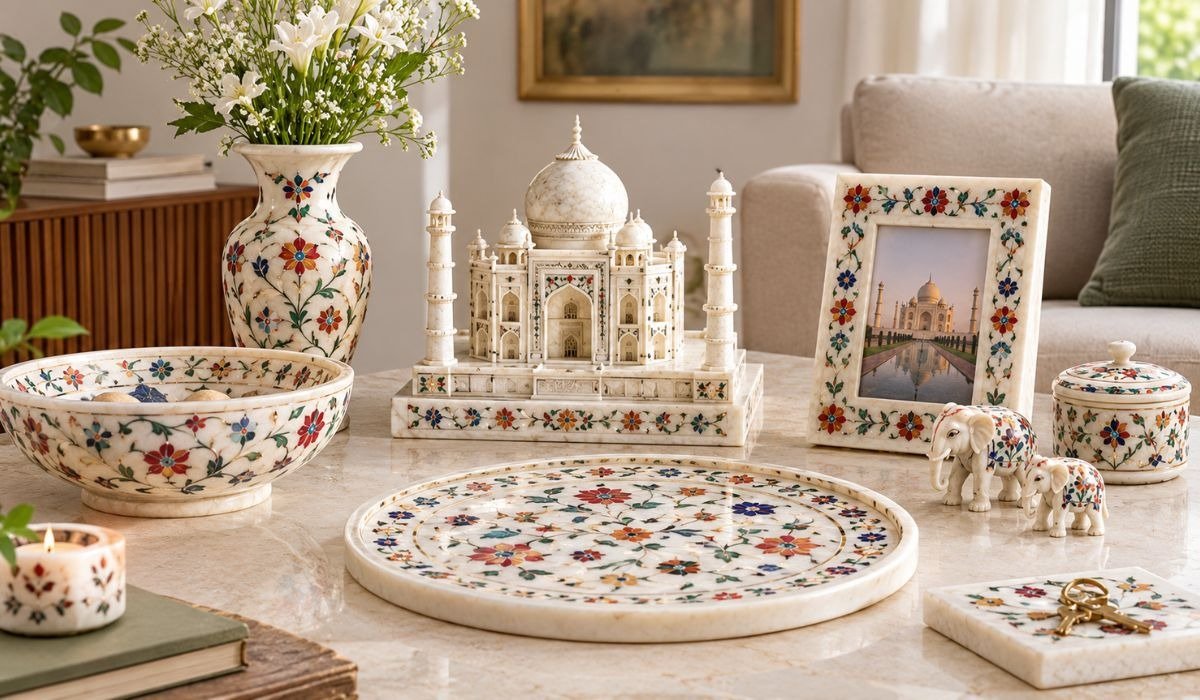
- Replicas and miniature monuments, often modeled on the Taj Mahal, work well as display pieces or keepsakes.
- Bowls, trays, and vases can hold keys, fruit, or flowers.
- Inlay tabletops and panels make a focal point in a living or dining space.
- Photo frames and small accessories are easy first purchases and travel well.
- Figurines and ornamental objects add character to shelves and desks.
For more ideas on displaying these pieces, this guide to luxury marble handicrafts for the home offers further decorative inspiration.
What Makes Marble Inlay Work Special?
Flowing floral patterns, repeating geometric motifs, and the contrast between white marble and darker or brightly colored stones create depth.
The effect depends on precision. Each tiny stone piece must be cut to fit its recess with almost no visible gap, then polished flush with the surrounding marble. A single misjudged cut can disrupt a whole pattern, so detailed pieces take time and steady hands.
Incorporating Marble Handicrafts into Modern Interiors
Marble’s cool, smooth surface pairs easily with other materials, so a few well-chosen pieces go a long way.
- Living rooms: Place an inlay tray or sculptural bowl on a coffee table, and keep surrounding items simple.
- Console tables and shelves: A pair of small vases or a framed miniature monument adds a quiet focal point.
- Dining spaces: A marble centerpiece suits a wooden table, especially alongside warm lighting.
- Offices: A polished paperweight, pen stand, or desk tray brings texture to a clean workspace.
Marble looks especially good with natural wood, neutral colors, and brass or other metal accents. Softer textiles balance its hardness: pairing a polished stone surface with handcrafted rugs for modern interiors creates a mix of cool and warm, hard and soft, that keeps a room from feeling stark. Mughal-inspired home décor works best when one or two statement pieces lead.
How to Choose Quality Marble Handicrafts
A little attention before buying helps avoid disappointment:
- Finish: Look for a smooth, consistent surface without rough patches or visible scratches.
- Carving and inlay alignment: Edges should be crisp, and inlaid pieces should sit flush with no noticeable gaps.
- Stability and weight: Check that the base is steady and that the piece suits its intended use, whether decorative or functional.
- Clear descriptions: Reliable sellers state the material, dimensions, and how the piece was made.
- Care and packaging: Ask about cleaning advice and how fragile items will be packed for shipping.
Always verify material composition and craftsmanship claims before purchasing. A seller who cannot explain a piece’s material or making is a warning sign.
Preserving Agra’s Marble Craftsmanship
Skills like stone cutting, carving, and inlay are passed on through practice, and they carry real cultural value. Buying thoughtfully, with attention to quality and honest descriptions, supports the continued demand that keeps such skills in use. To learn more about the people and workshops behind Agra’s handmade traditions, visit this page on the traditional artisans of Agra.
Timeless Art for Contemporary Homes
Agra’s marble heritage links Mughal-era decoration to the objects people choose today. Careful craftsmanship, patient inlay, and simple, durable materials make these pieces at home in both traditional and modern rooms. Whether you are drawn to a small tray or a full inlay tabletop, take time to examine the finish and ask questions about how it was made. For more handcrafted home décor and rugs from Agra, explore the collection at Agra Rugs & Handicraft.