



Blog
What Makes a High-Quality Handmade Rug? 10 Key Things to Look For

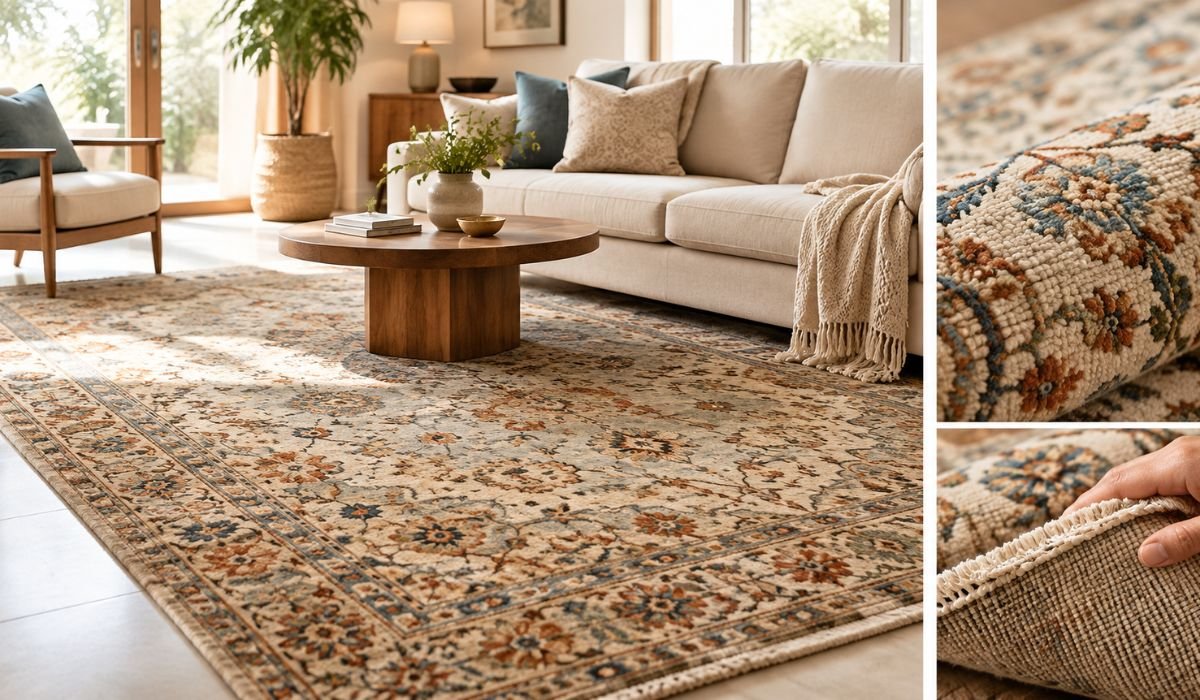
Handmade rugs can look similar in a photo and still be worlds apart in quality. Two rugs might share a price range and a floral motif, yet one holds its shape and color for decades while the other flattens within a year. A high-quality handmade rug isn’t just about appearance or price — it comes down to the materials used, how it was constructed, the skill behind the craftsmanship, and how well it’s finished. This guide breaks down the ten things worth checking before you buy.
What Makes a High-Quality Handmade Rug?
Rug quality isn’t a single feature you can spot at a glance. It’s the combination of material, construction, detailing, and finishing working together. Here’s what to look for.
1. Quality of the Materials
Wool, cotton, silk, and other natural fibers each behave differently underfoot and over time. Wool tends to be resilient and easy to live with, silk adds sheen and softness but needs gentler care, and cotton offers a lighter, more casual feel. Since photos can’t tell you what a rug is made of, always check the stated material in the product description rather than judging by appearance alone.
2. Hand-Knotted or Handmade Construction
Handmade rugs are built by hand, one row or one knot at a time, while machine-made rugs are produced on automated looms at high speed. Hand-knotted rugs in particular take considerable time and skill, since each knot is tied individually to build up the pattern. This process is part of why handmade pieces often carry more character and individuality than mass-produced alternatives, and why construction method affects durability.
3. Knot Density and Construction Detail
For hand-knotted rugs, knot density — the number of knots per square inch — can be a useful reference point. A higher knot count generally allows finer, more intricate patterns. That said, knot count alone doesn’t determine overall quality; it should be weighed alongside material, craftsmanship, finishing, and how you intend to use the rug.
4. Design and Pattern Detail
Clean lines, balanced motifs, and consistent detailing usually signal careful craftsmanship. At the same time, genuine handmade rugs are artisan-made rather than machine-printed, so slight variations in pattern or color are normal and not a flaw — they’re part of what makes each piece unique.
5. Color Quality and Dyeing
Look for even, well-saturated color without patchiness or obvious bleeding between shades. Some handmade rugs use natural or responsibly selected dyes, which can add depth and a slightly varied tone across the pile. Not every handmade rug uses natural dyes, so it’s worth checking the specific product rather than assuming.
6. Texture, Pile, and Feel
If you can, feel the rug before buying, or read close descriptions and reviews if shopping online. A good pile should feel even and reasonably dense rather than thin or patchy. The right texture depends on the room: a plush pile suits a cozy bedroom, while a lower, tighter pile often suits busier spaces.
7. Backing and Finishing
The back of a rug reveals a lot about how it was made. On hand-knotted rugs, you can often see the knots themselves, which should look neat and consistent. Check the edges and borders too — clean, secure finishing prevents fraying and adds to the rug’s longevity, not just its appearance.
8. Durability and Intended Use
A high-quality rug should suit where it will actually live. Living rooms and hallways benefit from denser, more resilient constructions, bedrooms can prioritize softness, and entryways or other high-traffic areas call for durable materials and a practical pile height. Material, construction, and maintenance needs should all factor into the decision.
9. Craftsmanship and Artisan Skill
Skilled craftsmanship shows up in tighter knotting, more precise patterns, and cleaner finishing. Our About Us page goes into more detail on traditional hand-knotted rug craftsmanship and how artisan skill shapes a finished piece. As with pattern and color, small variations from rug to rug are a natural part of handmade work, not a sign of poor quality.
10. Care, Maintenance, and Longevity
A quality rug should also be one you can realistically maintain. Regular vacuuming, prompt attention to spills, protection from excess moisture, and periodic rotation all help preserve a rug’s appearance. Some materials or constructions benefit from occasional professional cleaning — check the rug’s specific care guidance rather than assuming one routine fits every rug.
How to Check a Handmade Rug Before Buying Online
Before you add a rug to your cart, run through this checklist:
- Material (wool, cotton, silk, or a blend)
- Construction technique (hand-knotted, hand-tufted, flat-woven)
- Size, and whether it fits your space
- Knot density or detailing, where relevant
- What the back of the rug looks like
- Pile height and texture
- Color accuracy and pattern consistency
- Care instructions
- Shipping and return policy
- Multiple product photographs, including close-ups
Look at more than one photo and read the full specifications, since a single hero image rarely shows texture, backing, or true color.
Handmade vs Machine-Made Rugs
| Feature | Handmade Rug | Machine-Made Rug |
| Production | Artisan craftsmanship | Automated production |
| Individuality | Natural variations possible | More uniform |
| Construction | Handcrafted techniques | Machine production |
| Design | Can feature intricate artisan detailing | Highly consistent patterns |
| Buying consideration | Craftsmanship and materials | Specifications and intended use |
Neither option is automatically better — it depends on what you value and how the rug will be used.
Why Craftsmanship Matters When Choosing a Handmade Rug
A finished rug is the result of several stages working together: selecting the right materials, weaving or knotting the pattern by hand, finishing the edges and pile, and a final quality check. Retailers such as Agra Rugs & Handicraft, a source for handmade rugs and carpets from India, describe their collection as handcrafted by skilled artisans using materials like wool and silk, including hand-knotted wool rugs and other handmade styles. Seeing how a specific piece is described — material, technique, finishing — gives you a practical way to apply everything above to a real purchase.
Final Checklist for Buying a High-Quality Handmade Rug
- Confirm the material (wool, silk, cotton, or blend)
- Check whether it’s hand-knotted, hand-tufted, or flat-woven
- Review knot density if it’s hand-knotted, alongside other quality factors
- Look closely at pattern and color consistency
- Examine the back of the rug for knot visibility and finishing
- Match pile height and texture to the room
- Confirm the size fits your space — use a complete rug size guide if you’re unsure
- Read the care instructions before buying
- Check shipping and return policies
- Review multiple product photos, not just one
A high-quality handmade rug isn’t defined by price or first impressions. It comes down to materials, construction, craftsmanship, detailing, durability, finishing, and how well it suits the room you’re placing it in. Once you know what to look for, comparing options — including handcrafted collections from Agra Rugs & Handicraft — becomes a much more confident process.
FAQ
What makes a handmade rug high quality?
A high-quality handmade rug combines good materials, skilled construction (such as hand-knotting), even finishing, and consistent detailing. No single factor decides quality on its own — durability, craftsmanship, and suitability for the room all matter together.
How can you tell if a rug is genuinely handmade?
Check the back of the rug: hand-knotted pieces show visible knots, while machine-made rugs typically have a uniform backing. Genuine handmade rugs also tend to show slight, natural variations in pattern or color that mass production doesn’t produce.
Are hand-knotted rugs better than machine-made rugs?
Not automatically. Hand-knotted rugs offer artisan craftsmanship and individuality, while machine-made rugs offer consistency and often a lower price. The better choice depends on your budget, the room’s use, and how much you value handmade character.
What material is best for a durable handmade rug?
Wool is widely used for durable handmade rugs because it’s naturally resilient and holds up well to regular use. Cotton and silk have their own strengths, such as softness or sheen, but may suit lighter-use spaces better than high-traffic areas.
What should you check before buying a handmade rug online?
Review the material, construction technique, size, pile and texture, care instructions, and return policy. Look at multiple product photos, including close-ups of the back and pile, since a single image rarely shows a rug’s full quality.