



Blog
How Natural Fibers Make Rugs More Sustainable

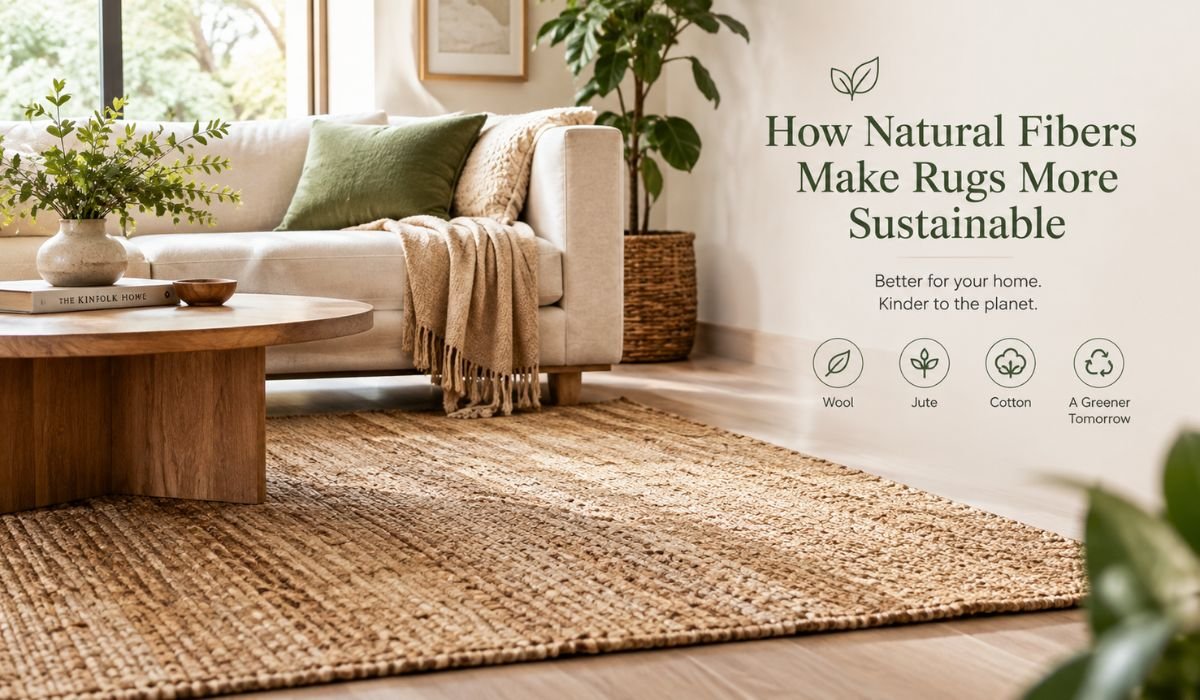
Sustainability is no longer a niche concern when choosing home décor. From Berlin apartments with oak floors to Scandinavian-inspired living rooms in Hamburg, more homeowners want furnishings that look good and last. Natural fiber rugs offer a thoughtful alternative to rugs made mainly from synthetic materials such as polyester or polypropylene.
Wool, jute and cotton each bring different environmental and practical advantages, from renewability to durability to a warm, grounded texture. This guide explains how natural fibers can make rugs more sustainable, where the limits are, and how to choose a rug that suits both your interior and your values.
What Are Natural Fiber Rugs?
Natural fiber rugs are woven, knotted or tufted from fibers that come from plants or animals rather than from petroleum. The most common are wool (animal), jute and cotton (plant). Others include sisal, seagrass, hemp and silk.
Fibers are harvested, cleaned and spun into yarn, then turned into rugs by weaving, knotting or tufting. Wool is shorn from sheep, jute is cut and processed from the stalks of the jute plant, and cotton is picked from the cotton boll. Synthetic rugs, by contrast, start as polymers made from petroleum, then are extruded into fibers.
That said, a natural fiber is not automatically a sustainable one. The real footprint depends on how the material is sourced, processed and dyed, how the rug is made, and how long it stays in use. Quality matters as much as material, which is why it helps to understand handmade rugs and what separates a well-made piece from a disposable one.
Why Natural Fibers Can Make Rugs More Sustainable
Used thoughtfully, natural fibers offer several environmental advantages over synthetics.
Renewable Materials
Plant fibers such as jute and cotton come from crops that regrow each season, and wool is renewed as sheep grow new fleece. When these materials are responsibly cultivated, they can be a renewable resource rather than a finite one. Farming practices still matter, particularly water use and pesticide use for cotton.
Biodegradability
Many natural fibers can break down more readily than petroleum-based synthetic fibers under appropriate conditions. This can matter at the end of a rug’s life. Backings, latex and dyes can affect how well a finished rug actually degrades.
Reduced Dependence on Synthetic Materials
Choosing natural materials can reduce reliance on petroleum-derived fibers like polyester and polypropylene. It is one practical way to cut the amount of synthetic material in your living space.
Long-Term Durability
Sustainability is not only a material question. A rug that stays attractive and functional for many years can reduce the need for frequent replacement. A well-made natural fiber rug that lasts a decade or more often has a smaller overall footprint than a cheaper rug replaced every few years.
Wool Rugs and Sustainability
Wool is a natural, renewable animal fiber with a long record in rug making. It is resilient, so the fibers spring back after being walked on, which helps rugs keep their appearance over time. It also has a soft, comfortable texture and natural insulating properties, adding warmth underfoot and helping dampen sound.
Because wool is durable and suits traditional construction, it works especially well in high-quality handmade rugs designed for long use. A longer usable life means fewer replacements.
Responsible sourcing and production still matter. Animal welfare, land management, and the way wool is washed and dyed all affect the overall sustainability of wool rugs.
Why Jute Rugs Are an Eco-Friendly Option
Jute is popular with environmentally conscious homeowners for good reason. It is a fast-growing plant fiber and a renewable crop, and it is relatively simple to process into yarn. Its biodegradable characteristics and natural golden-beige texture give it a low-impact aesthetic that fits naturally into Scandinavian, Japandi and modern Central European interiors.
Jute works well in living rooms, bedrooms, dining rooms and home offices, especially where a calm, textured base layer is wanted. It is softer than sisal but less hardwearing than wool, so it suits moderate-traffic spaces best. You can read more in our guide to eco-friendly jute rugs.
For a practical example, this handwoven jute area rug pairs natural beige jute with subtle cotton stripe accents.
Cotton Rugs and Sustainable Home Décor
Cotton is another natural fiber option, valued for its lightweight construction, soft texture and versatility.
These rugs are easy to style and suit casual interiors, such as kitchens, children’s rooms and relaxed living spaces.
Many flat-woven designs are also simple to move and refresh. Many flat-woven designs are also simple to move and refresh.
Depending on construction, cotton rugs may be reusable or recyclable at the end of their life. Responsible cotton production is important, as conventional cotton farming can be water-intensive. When choosing, look for clear information about how farmers grow and process the cotton rather than assuming every cotton rug is a sustainable choice.
Handmade Production Can Support Sustainability
Craftsmanship can influence a rug’s environmental footprint. Traditional weaving, hand-knotting and hand-weaving rely less on highly automated production and more on skilled artisan work. Each piece tends to be individual, and well-made rugs can be repaired and kept in use rather than discarded.
Handmade construction does not automatically guarantee sustainability. But durable craftsmanship combined with natural materials can contribute to a longer product life, which is a key part of the picture. At Agra Rugs & Handicraft, traditional techniques and natural wool and fibers are central to how our rugs are made.
Natural Fibers vs Synthetic Fibers: Which Is More Sustainable?
| Feature | Natural Fiber Rugs | Synthetic Rugs |
| Common materials | Wool, jute, cotton | Polyester, nylon, polypropylene |
| Source | Plant/animal fibers | Mostly petroleum-based |
| Biodegradability | Often higher | Generally low |
| Durability | Depends on fiber/construction | Depends on material |
| Texture | Naturally varied | More uniform |
| Sustainability | Depends on sourcing and production | Depends on manufacturing and lifespan |
There is no single perfect rug material. Consider material, durability, sourcing, manufacturing, maintenance and expected lifespan together. A well-made, long-lasting rug of any type will generally outperform a poorly made one that needs replacing early.
How to Choose a More Sustainable Rug
Use this checklist when shopping:
- Check the fiber composition.
- Look for durable construction.
- Consider handmade or responsibly produced options.
- Check dyeing and finishing practices where information is available.
- Choose a rug that suits the room and its traffic level.
- Follow proper care instructions.
- Avoid replacing rugs unnecessarily.
- Consider the rug’s expected lifespan.
- Look for transparent product information.
- Choose quality over disposable décor.
How Proper Rug Care Improves Sustainability
Extending the life of a rug you already own is one of the simplest ways to make a purchase more sustainable. Good habits include:
- Vacuuming regularly to remove abrasive grit
- Treating spills promptly
- Avoiding excessive moisture
- Rotating the rug to even out wear
- Following material-specific cleaning instructions
- Using professional cleaning when necessary
Jute in particular needs care around water, so it is worth reading how to clean and maintain jute rugs before tackling a stain.
Sustainable Rugs for Different Rooms
No single material is best everywhere. As a guide:
- Living room: wool or jute
- Bedroom: wool or soft cotton
- Dining room: durable, easy-to-maintain natural fibers
- Home office: jute, cotton or low-pile wool
- Entryway: durable, low-pile natural fiber rugs
Why Sustainable Rugs Are Becoming More Popular
Interest in natural materials, artisan-made products and long-lasting décor keeps growing. Many homeowners are moving toward conscious consumption, minimalist interiors and organic textures, which suits the muted palettes common in German and wider European homes. This shift reflects a broader move toward sustainable interior design, and it is visible in Indian handmade rug trends, where natural textures, jute, wool and artisan craftsmanship are in demand.
FAQ
Are natural fiber rugs environmentally friendly?
They can be, but it depends on sourcing, processing, dyes, construction and lifespan. Natural fibers are renewable and often more biodegradable than synthetics. A durable, responsibly made natural rug is generally a better choice than a short-lived one, though no rug has zero environmental impact.
Which natural fiber is best for sustainable rugs?
No single fiber is best. Wool offers durability and a long life, jute is fast-growing and biodegradable, and cotton is soft and versatile. The best choice depends on the room, traffic level, and how responsibly the manufacturer sources and makes the rug.
Are jute rugs more sustainable than synthetic rugs?
Jute is a renewable, biodegradable plant fiber, so it often compares well with petroleum-based synthetics. However, jute is less durable in high-traffic or damp areas, and backings or finishes can affect its footprint. Lifespan and care are important in the comparison.
Are wool rugs sustainable?
Wool is a renewable, resilient and long-lasting fiber, which supports sustainability. Its overall impact still depends on farming practices, animal welfare, washing and dyeing processes, and how long the rug is used. Responsibly sourced, well-made wool rugs can last for many years.
Are natural fiber rugs biodegradable?
Many natural fibers can biodegrade more readily than synthetic ones under appropriate conditions. However, latex backings, synthetic blends and some dyes or finishes can slow or limit this. Check the full rug composition if end-of-life matters to you.
How long do natural fiber rugs last?
Lifespan varies by fiber, construction and care. Wool and well-made handmade rugs can last for many years, while jute and cotton typically suit lighter use. Placement, rotation, cleaning and avoiding moisture all influence how long a rug stays in good condition.
How can I make my rug last longer?
Vacuum regularly, treat spills quickly, avoid excess moisture and rotate the rug to even out wear. Follow cleaning instructions for the specific fiber, and consider professional cleaning when needed. Caring for a rug is one of the simplest ways to reduce waste.
Final Thoughts: Are Natural Fiber Rugs a Sustainable Choice?
Natural fiber rugs can be a more sustainable choice, particularly when they combine responsible material sourcing, durable construction, long-term usability, thoughtful manufacturing and proper maintenance. Together, these reduce how often a rug needs replacing, which is where much of the benefit lies.
If you are looking for a lasting piece, you can explore handmade rugs from India made from natural fibers by Agra Rugs & Handicraft.